
Overview
- Workplace silence often masks disengagement and emotional strain, limiting collaboration and trust. Team-building facilitators address this by creating psychological safety through clear boundaries, purposeful activities, and gradual participation.
- They encourage openness by normalizing mistakes, modeling vulnerability, and fostering inclusive dialogue. At TrainStation, sessions are structured to build trust, communication, and long-term team resilience.
In many workplaces, silence is often mistaken for harmony. Meetings end without honest feedback, employees hesitate to speak up, and collaboration becomes performative instead of authentic. Over time, this emotional tension quietly drains energy from teams and leaders alike.
The challenge becomes even more difficult: how do you create an environment where people feel safe enough to contribute openly without fear of embarrassment, rejection, or criticism?
This is how team building facilitators can help create emotional safety. More than just preparing activities and energizing participants, they build a workplace condition where everyone is respected, included, and psychologically secure.
Setting Clear Boundaries and Expectations

Neuroscience shows that when the brain perceives a social threat, it shifts into a protective mode, which limits creativity, collaboration, and interaction. Trainers help interrupt these stress responses by setting boundaries and expectations.
Establishing Ground Rules
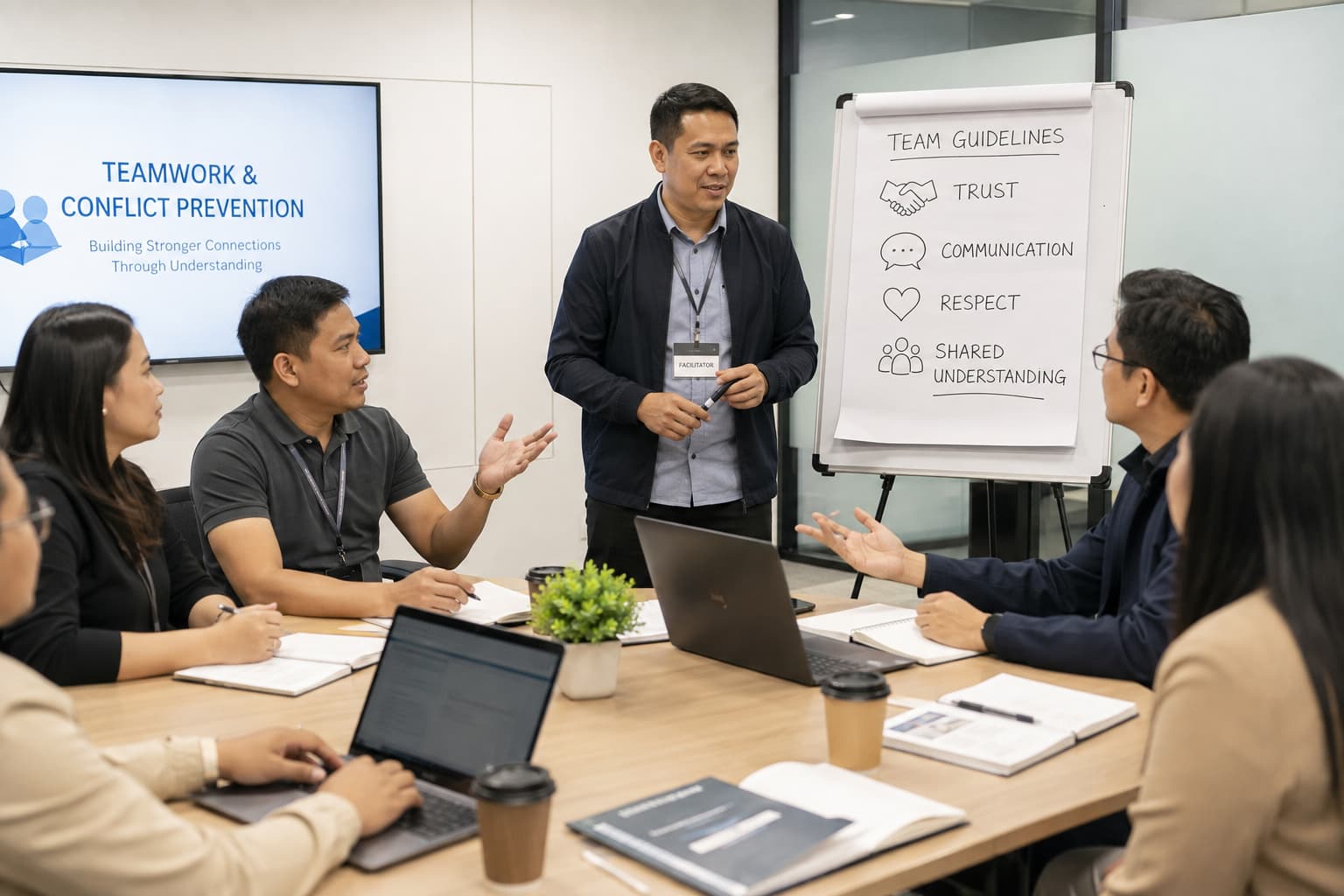
Ground rules typically include listening without interruption, maintaining confidentiality, avoiding ridicule, and ensuring equal opportunities for everyone to speak. These standards reduce social uncertainty and create a more stable group dynamic.
The brain naturally assesses environments for safety or threat, particularly in group interactions. When clear behavioral expectations are established, participants are more likely to engage openly because the setting feels structured, predictable, and psychologically secure.
Naming the Purpose
Without context, members can interpret exercises as forced, awkward, or evaluative, which can increase resistance and self-awareness. By having the purpose behind every activity, coaches help participants understand how the experience links to communication, teamwork, trust, or leadership.
In this aspect, understanding the “why” also matters. Employees who are emotionally exhausted are less likely to respond positively to activities that feel performative or disconnected from real workplace difficulties.
Pacing and Graduated Participation
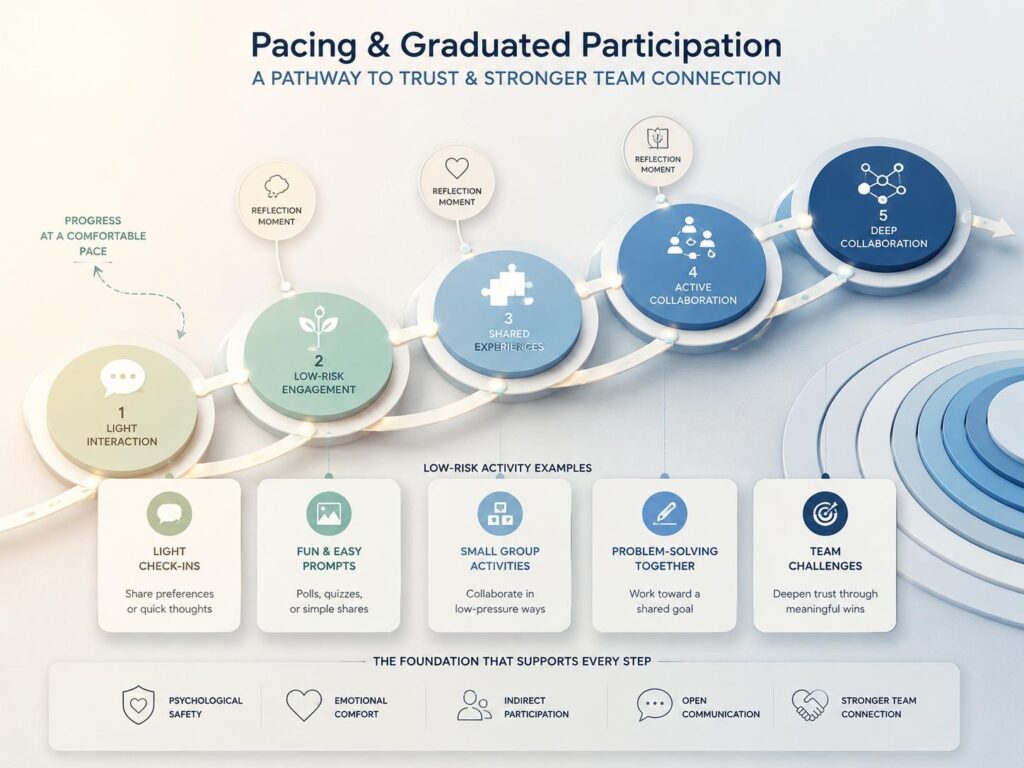
Trust cannot be forced instantly. Effective facilitators understand that emotional safety develops gradually through carefully paced interaction.
Gradual Deepening
Rather than beginning with highly personal discussions, trainers and coaches start with lighter, lower-risk activities that allow participants to warm up socially. As comfort arises, conversations and activities become more reflective and collaborative.
This gradual progression works because the brain builds trust incrementally. Small positive engagements create familiarity and reduce social vigilance, making participants more willing to share perspectives due to emotional safety.
Using Indirect Methods
Storytelling, metaphors, collaborative activities, or hypothetical scenarios promote reflection without placing individuals on the spot. These techniques reduce psychological pressure because participants can discuss concepts through shared experiences rather than personal exposure. In several cases, indirect discussion allows teams to explore hard topics more honestly and naturally.
Holding Space
This means being calm, attentive, and non-reactive while participants process emotions, disagreements, or tough discussions. Instead of rushing to ease tension, team-building coaches create space for people to speak and reflect safely. This emotional steadiness helps regulate the group’s atmosphere. Holding space presents that discomfort does not automatically equal danger. Teams begin to learn that honest conversations can occur without humiliation or escalation of conflict.
Modeling and Normalizing
Facilitators in the Philippines help create psychological security not only through structure but also through behavior.
Demonstrating Vulnerability
A facilitator who models openness urges others to do the same. This does not mean oversharing personal encounters, but rather showing originality, empathy, and emotional presence during engagements. Simple behaviors, such as admitting uncertainty, acknowledging challenges, or validating emotions, indicate to members that imperfection is acceptable. This is essential because many work settings unintentionally reward emotional suppression, causing staff to hide issues or disengage socially.
Reframing Mistakes
Emotionally unsafe places typically treat mistakes as failures rather than opportunities for growth. So instead of focusing on blame, facilitators promote reflection: What happened? What can the team learn from it? How can communication enhance moving forward?
This approach minimizes fear-based participation. Employees become more willing to contribute ideas, ask questions, and experiment when they know mistakes will not automatically be interpreted as embarrassment or criticism.
Facilitating Inclusivity and Listening
Emotional safety relies on whether people feel seen, heard, and valued within the group.
- Leveling the Playing Field: Coaches involve rotating leadership roles during activities, which makes smaller discussion groups, or uses structured turn-taking exercises.
- Active Acknowledgment: The brain interprets acknowledgment as a signal of belonging and social acceptance, where staff feel recognized and collaborative throughout the session.
Grounding the Room
Team-building coaches regularly track the emotional energy in the environment and make adjustments to maintain stability and respect.
- Addressing the Vibe: Sometimes this means introducing a lighter activity, pausing for reflection, or simply naming what the group may already be feeling.
- Protecting Dignity: Above all, emotional safety requires protecting participants from humiliation or exclusion. Activities are carefully guided to encourage participation while honoring individual comfort levels and communication styles.
How TrainStation Creates Emotionally Safe Team Building Experiences
At TrainStation, team building is designed to balance engagement, reflection, and emotional safety. Sessions are structured with consideration for different personalities, communication styles, and comfort levels, starting with icebreakers and gradually progressing to deeper collaboration and discussion.
Brain-based strategies are integrated to strengthen cooperation, trust, and shared problem-solving. Guided activities ensure participants feel supported in contributing meaningfully, resulting in more connected, communicative, and resilient teams that sustain stronger workplace relationships beyond the session.
Key Takeaway
How team-building facilitators help create emotional safety begins with structured facilitation, inclusive activities, and psychologically safe interactions. Our team at TrainStation creates team-building experiences that prioritize emotional safety, meaningful connection, and brain-based collaboration. To know more about our strategies and experience psychological security, reach out to us today!