What makes an effective team building facilitator for startups and corporates?
- Strong communication skills
- Adaptability and flexibility
- Problem-solving abilities
- Leadership and impartiality
- Enthusiasm and energy
- Coaching and feedback skills
Overview
- Skilled facilitation, not the activity itself, drives effective team building.
- Tailoring communication, adaptability, coaching, and leadership to localized workplace cultures enables facilitators to foster psychological safety, collaboration, engagement, and lasting behavioral change across both startups and corporate teams.
Shoving your team into an escape room won’t magically fix a toxic culture.
When applied consistently, intentional team-building is pure gold—it shrinks petty conflicts, supercharges accountability, and builds the psychological safety net teams need to crush hard goals. But here is the catch: the magic isn’t in the game, it’s in the guide.
Without a strategic puppet master, your expensive offsite rapidly devolves into an expensive recess. It becomes a purely recreational time-suck that leaves your long-term performance and culture completely untouched.
To bridge the gap between “fun afternoon” and “Monday morning behavioral shift,” you have to decode what makes effective team building facilitator startups and corporates choose to invest in.
The Expert Take: Anyone can buy a deck of icebreaker cards. An elite facilitator doesn’t just run a game; they read the room, trigger healthy friction, and translate a silly exercise into a corporate cheat code.
Strong Communication Skills
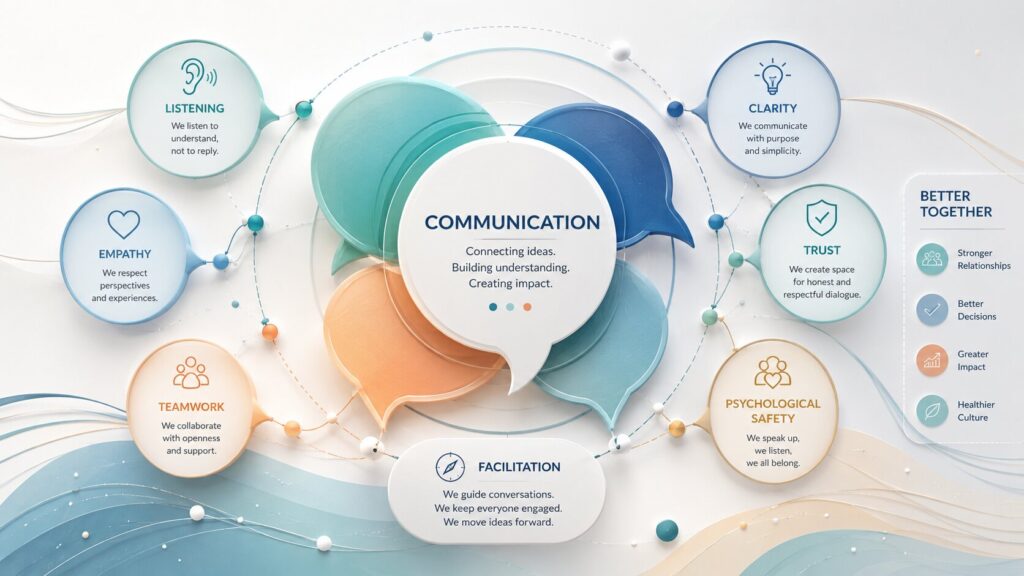
Great facilitation is literal brain surgery without the scalpel. When a guide uses clear, empathetic language, they are actively putting the amygdala (the brain’s fire alarm) to sleep while waking up the prefrontal cortex (the logic and collaboration engine).
In Philippine workplaces, this isn’t just science; it’s deeply cultural. Leveraging a padala approach—gentle, indirect, and highly considerate communication—is the ultimate antidote to hiya (social shame). It lowers defenses, preserves psychological safety, and coaxes quiet, brilliant minds out of their shells.
Look at how it plays out across different business ecosystems:
- The Corporate Sandbox: Using indirect diplomacy ensures legacy teams don’t feel attacked by shifting organizational goals, keeping collaboration high.
- The BGC Fintech Startup: When engineering and marketing are at war over deadlines, an elite facilitator uses active listening and neutral feedback framing (“I observed X,” rather than “You failed at Y”). This drops the team’s threat response, replacing finger-pointing with dopamine-driven problem-solving.
Anyone can shout instructions. An elite facilitator knows how to navigate both the human nervous system and local cultural dynamics to turn friction into a workplace cheat code.
Adaptability and Flexibility
The brain constantly walks a tightrope between chasing novelty for a dopamine rush and craving predictability to dodge heavy cognitive load and preserve psychological safety.
Top facilitators are master tightrope walkers, constantly tweaking structure and pacing to keep the room in a curious state of learning rather than a defensive freak-out mode. In Philippine workplaces, where pakikisama (harmony) and a deep respect for structure coexist, dropping wild, unannounced curveballs on your team is a recipe for instant resistance—especially within traditional bastions like BPOs or family-run empires.
In a Cebu BPO, for instance, swapping chaotic, unpredictable games for a rock-solid session blueprint—featuring a stable opening ritual and exactly one new challenge per session—instantly crushed agent anxiety and shot engagement through the roof. This is brain-based adaptability in the wild: locking down a predictable framework, injecting controlled doses of novelty, respecting cognitive battery life, and ensuring the collective brain remains receptive rather than retreating into survival mode.
Problem-Solving Abilities
Effective facilitation keeps the brain’s executive function network, which is the prefrontal cortex’s strategic command center, fully online. Under fire, this system aggressively reverts to primitive, reactive survival thinking.
For instance, a Quezon City e-commerce startup drowning in chaotic holiday inventory nightmares, a facilitator killed the panic by engineering a zero-blame, low-threat sanctuary. They chopped massive problems into 3 to 5 bite-sized targets that respected human working memory limits.
Collaborative brainstorming forced diverse neural pathways to fire simultaneously. This dragged the squad out of panic-induced cognitive tunneling and shifted them toward agile solutions.
Leadership and Impartiality
Facilitation leadership directly alters how the brain navigates social hierarchy, which can easily trigger status-based threat alarms that completely derail teamwork. In Philippine corporate culture, where deep reverence for authority and pakikisama are baked into the operational DNA, any hint of favoritism or bias instantly triggers the amygdala, shutting down open dialogue and cross-functional unity.
In a Makati family conglomerate, a facilitator’s unshakeable neutrality stopped executive-versus-millennial status games in their tracks. Modeling absolute emotional regulation allowed the guide to stealthily cool the room’s neurological temperature and manufacture an instant pocket of psychological safety. This allowed both generations to pitch ideas without fear of hierarchy-driven backlash, perfectly balancing operational authority with a highly approachable vibe.
Enthusiasm and Energy
Facilitation enthusiasm is a strict neurological driver rather than a mere personality trait. The brain’s mirror neuron system naturally copies a guide’s emotional state, allowing their energy to directly sculpt group dynamics. In cultures where masigla engagement heavily dictates participation, genuine enthusiasm spreads rapidly via emotional contagion, lighting up dopamine reward pathways and instantly boosting motivation.
A Davao manufacturing plant facing brutal post-layoff morale dips utilized a facilitator’s rock-solid energy to throttle group arousal into an optimal learning zone, successfully dodging both disengagement and high anxiety. Radiating this positive affect signaled safety to the brain’s threat-detection radar, keeping the prefrontal cortex fully online for sharper thinking and collaboration.
Coaching and Feedback Skills
Effective coaching and feedback actively drive neuroplasticity, which is the brain’s ability to rebuild its own wiring through repetition, reinforcement, and practice. Workspaces that deeply prize pag-unlad (progress) find that growth-oriented feedback outperforms direct criticism, which usually triggers hiya and sparks defensive stress responses that completely block learning.
A Taguig tech company sharpening its agile practices utilized a facilitator who deployed growth-mindset language and hyper-specific, actionable feedback to trigger behavior change without denting self-confidence. Consistent repetition and guided practice locked in the new behaviors through neural reinforcement, while carefully balancing challenge with support kept employees in an optimal learning state.
Tailoring the Approach with TrainStation: Startups vs. Corporates
TrainStation intentionally designs programs to adapt to every organization’s unique pace, structure, and daily bottlenecks. Fast-growing startups often need help building baseline trust from scratch, while established corporate giants require support to smash through operational silos and strengthen leadership pipelines. The team stands fully equipped to deploy custom behavioral interventions for either arena.
Fusing cognitive science strategies with boots-on-the-ground facilitation ensures each session remains high-impact, engaging, and engineered for real-world execution.
Key Takeaway
Understanding what makes an effective team building facilitator for startups and corporates comes down to more than experience alone. At TrainStation, our programs are tailored for both startups and corporates, ensuring every activity is purposeful, relevant, and impactful.
If you’re ready to build stronger teams, reduce friction, and create meaningful collaboration that lasts, we’re here to help. Reach out to us today!