Overview
- Investing in your people is only worthwhile if it creates tangible, measurable improvements in your organization.
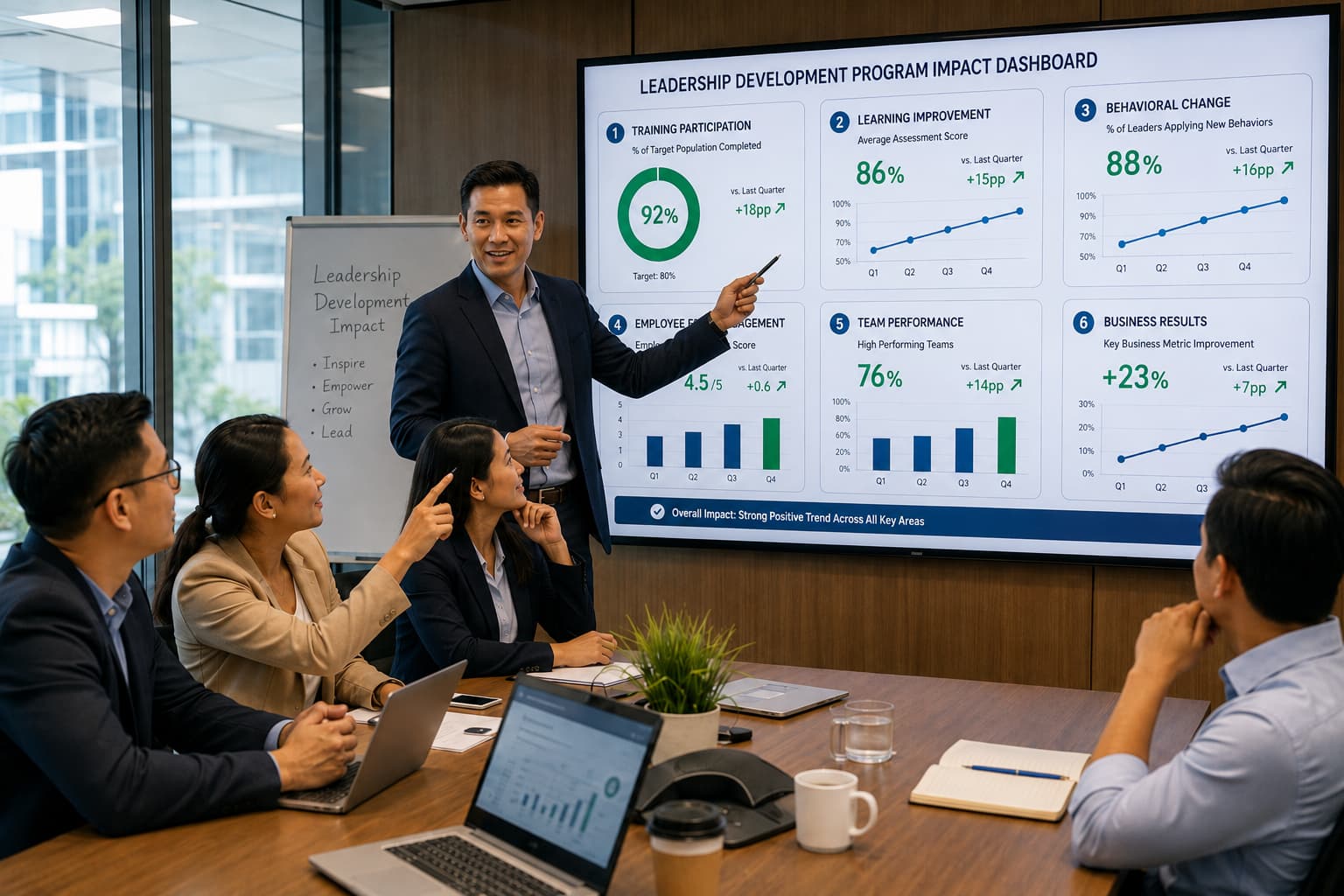
- Knowing how to measure the impact of leadership training programs gives you the clear data you need to see if your team is truly absorbing new mindsets and applying those skills under daily workplace pressure.
A room full of smiling faces and high scores on a post-seminar evaluation form can easily look like a victory. But a week after the workshop ends, when the initial excitement fades, how do you know if anything actually changed?
As a leader, you don’t have time or energy to waste on short-lived hype. So, learning how to measure the impact of leadership training programs is the key to looking beyond the temporary “feel-good” phase. It lets you see whether your managers are genuinely transforming their mindsets and driving the long-term business goals that keep you up at night.
By taking a science-backed approach to evaluation, you can move past guesswork and pinpoint exactly what works.
Level 1: Reaction (Did they like it?)
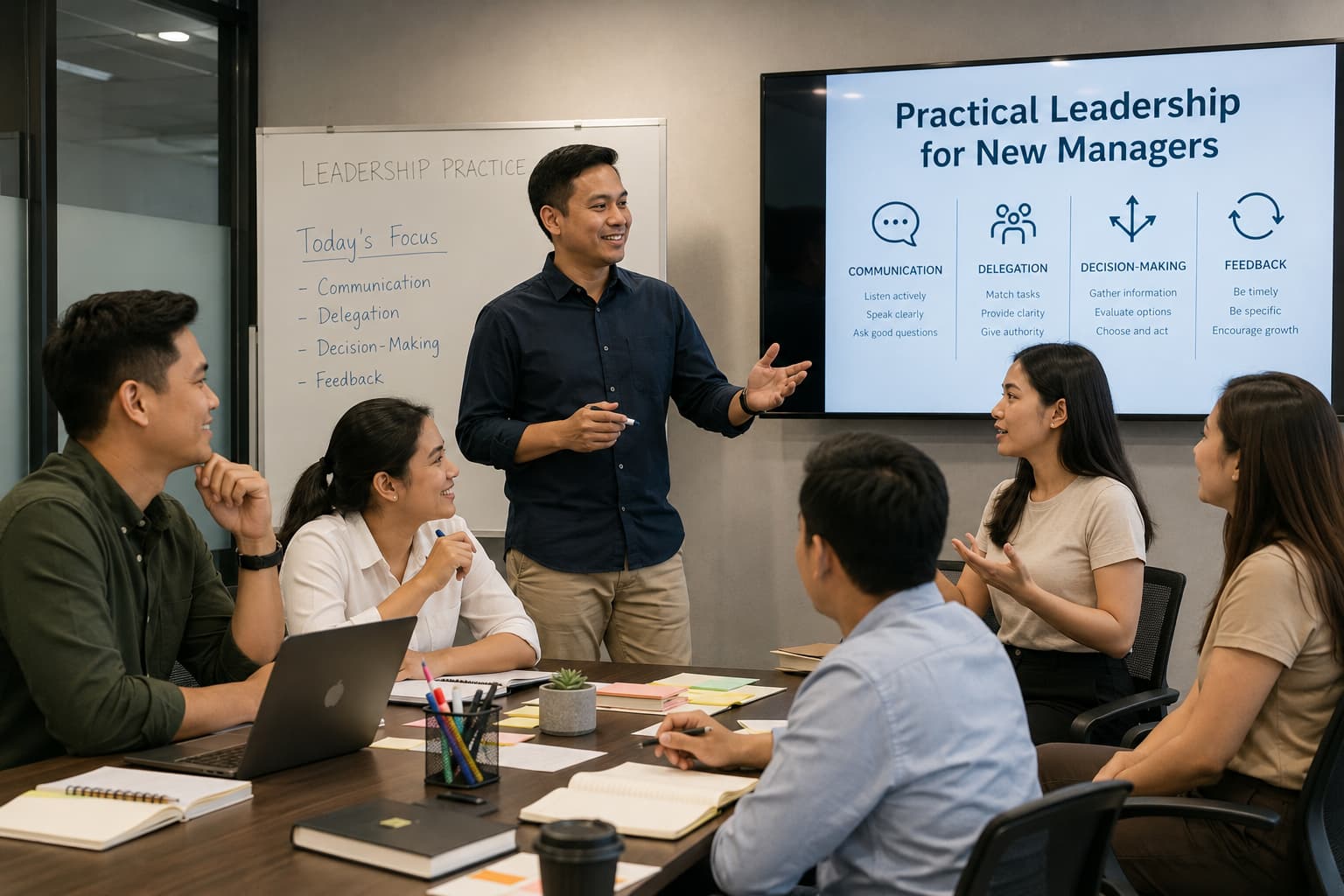
Reaction measures your team’s immediate emotional response. Did the session actually resonate with them, or did they spend the afternoon checking their watches? For leadership training in the Philippines to stick, the experience needs to feel deeply relevant and highly engaging.
Most leaders gather this feedback through quick post-training surveys immediately after the program wraps up. While the experience is still fresh, you want to gauge their raw impressions.
Let’s be honest, a positive reaction alone doesn’t guarantee a manager will completely transform their leadership style overnight. However, it is a crucial first step. Think of Level 1 as checking the emotional runway. If the facilitator didn’t build strong rapport or if the material created subconscious barriers to learning, the plane will never take off.
Level 2: Learning (Did they absorb the material?)
Did the program shift their mindset, upgrade their cognitive tools, and expand their capabilities? True learning isn’t just about memorizing new management buzzwords; it’s about whether your team members now possess the internal confidence and subconscious commitment to act differently.
At its core, this stage asks a vital question: Did the training rewire how they view their responsibilities? Without a solid foundation in integrating practical skills, a manager can’t translate concepts into real-world workplace changes.
Measuring this level helps you verify that the core methodologies, whether it’s advanced coaching frameworks or emotional intelligence principles, have truly taken root. By tracking learning outcomes early, you can step in to reinforce key concepts, so your teams have the clarity they need before they take these new behaviors out into the field.
Level 3: Behavior (Are they applying it on the job?)

Level 3 moves past theoretical knowledge and asks: Are your teams actually acting differently on the job, or have they slipped right back into their old habits?
Rather than testing what they know, you are looking for observable, day-to-day shifts. How are they communicating under pressure? How do they navigate conflict?
Even the most brilliant training program will fail if participants return to an environment that doesn’t support their growth. Lasting behavioral change requires consistent accountability and psychological safety.
To measure this stage objectively, leverage structured coaching sessions and tools like 360-degree feedback. Gathering confidential insights from peers, direct reports, and supervisors gives your leaders a clear mirror of their daily impact. It highlights their blind spots and helps them consciously align their new skills with the company’s vision.
Level 4: Results (What is the business impact?)
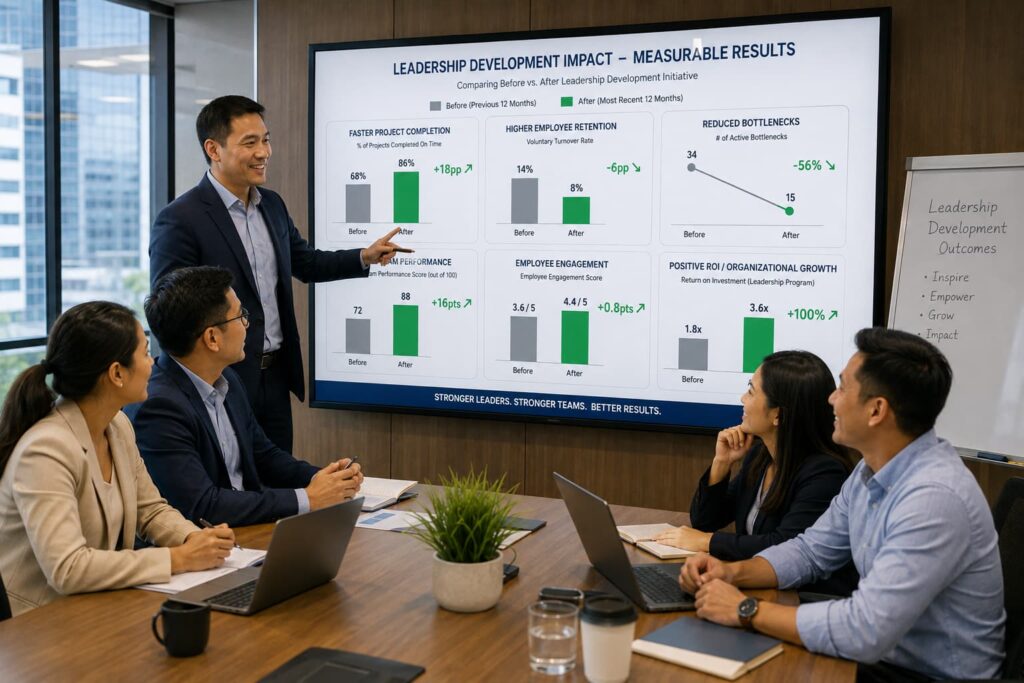
Level 4 is the ultimate test for any startup founder or burnt-out executive. It shifts the spotlight away from individual growth and shines it directly on your bottom line.
When leadership improves, the ripple effect should show up in your company’s vital signs. You aren’t just looking for “better communication”; you are looking for tangible business metrics, such as completing projects faster with fewer costly bottlenecks and talented team members staying because they feel supported.
Level 4 gives you the clearest picture of your overall return on investment (ROI). By connecting these high-level organizational outcomes to the behavioral shifts you tracked in the earlier stages, you get undeniable proof of value.
Strengthen Your Leadership Development Strategy with TrainStation
To see lasting results, you need a development strategy designed from the ground up to align with your business goals, rewrite old behavioral patterns, and equip your teams to handle real workplace pressure.
That is exactly where we come in.
At Trainstation, we partner with you to design transformative learning experiences that drive long-term organizational success. Through our signature EnterTRAINment approach, fused with science-backed Neuro-Linguistic Programming (NLP) methodologies, we keep your teams deeply engaged while equipping them with actionable skills.
Key Takeaway
Great leadership development needs to rewire how your team thinks, empower them to lead with authentic confidence, and spark measurable growth across your entire organization.
By understanding how to measure the impact of leadership training programs, you gain a clear roadmap to see exactly what is working.
At Trainstation, we design transformative experiences that empower leaders to champion lasting workplace change. Connect with our team today, and let’s build a leadership pipeline that delivers the real-world results your business deserves.