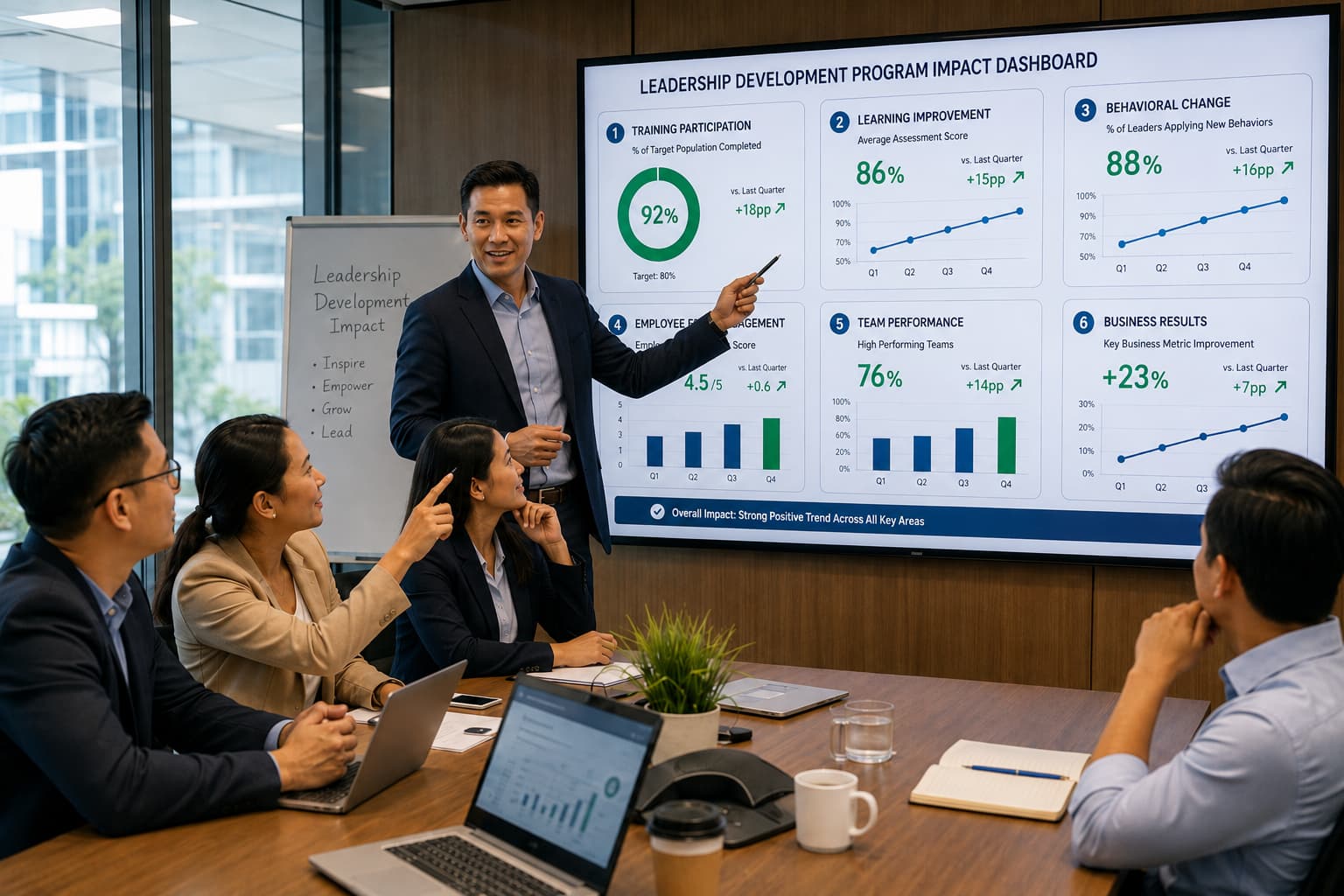

How can leadership training help new managers build confidence at work?
- Mastering difficult conversations
- Effective delegation
- Improved communication
- Decision-making frameworks
- Transition support
Overview
- Leadership training helps new managers move from uncertainty to confidence by teaching practical skills for feedback, delegation, and clear communication.
- Structured exercises and decision-making frameworks reduce stress and build consistent judgment.
- Gain hands-on practice, mentoring, and tools that make difficult conversations and team transitions manageable by joining Trainstation, one of the best team-building facilitators in the Philippines.
Stepping into a management role is often seen as a reward for strong performance, but for some managers, it also comes with a new set of uncertainties. You may suddenly find yourself asking: How do I lead people who used to be my peers? How do I give feedback without damaging relationships? How do I make the right decisions in challenging times? These moments of self-doubt are the easiest thing.
That’s where a leadership training becomes a valuable support system. Understanding how leadership training can help new managers build confidence at work and emerging leaders grow is necessary to lead with clarity and purpose.
Mastering Difficult Conversations

Addressing performance issues, misunderstandings, or providing constructive feedback can feel uncomfortable, especially for leaders who are still adjusting to their new position. When the brain perceives this as stressful, it can trigger defensive reactions that make it more difficult for people to listen, process details, and respond appropriately.
With leadership training, managers can approach these discussions with structure instead of hesitation. Through guided scenarios and frameworks, you learn how to separate emotions from facts, communicate expectations clearly, and create conversations focused on improvement rather than blame.
Effective Delegation
Many first-time managers experience a common challenge: doing the work themselves because it feels faster or safer. However, true leadership requires a different approach: trusting others to contribute and grow.
An effective leadership activity can address this. During the training, managers are guided to understand that delegation is not simply assigning tasks. It should involve identifying team members’ strengths, setting clear expectations, and creating accountability without micromanagement. Gradually, this builds confidence within the team because you learn that leadership is about empowering others, not carrying every responsibility alone.
Improved Communication
One of the biggest adjustments executives face is realizing that communication is no longer just about sharing information. It’s now about creating understanding, alignment, and trust within a team. Sometimes, a message that may seem clear to a manager is interpreted differently by employees because expectations aren’t clearly explained.
Through practical exercises during the leadership development program, you learn how to adjust your communication style, listen to concerns, and create conversations where employees feel comfortable sharing their points of view. It’s also best to understand that people respond better when discussions are clear and respectful, because it fosters a sense of psychological safety. When employees’ concerns and their voices are valued, collaboration becomes easier.
Decision-Making Frameworks

Decision-making can feel like one of the heaviest responsibilities that comes with leadership. Decisions made by individual contributors influence their work, while managers’ decisions affect team performance, workflows, and even employee experiences.
Development training helps ease this pressure by providing structured decision-making frameworks. Instead of reacting immediately to problems, you learn how to assess situations, identify priorities, consider different perspectives, and evaluate possible outcomes before taking action. This approach matters because uncertainty can increase mental strain and make arbitration harder. In the long run, you build trust and become firm in your judgments that genuinely support the entire team and organizational objectives.
Transition Support
Becoming a manager is an ongoing transition that requires time, practice, and growth. During this shift, you may experience moments of doubt as you navigate unfamiliar responsibilities and learn how to lead people with varying needs and working styles.
Executive programs deliver support during this adjustment period by creating opportunities to practice leadership behaviors before applying them in real situations. Through mentoring, conversations, simulations, and reflection tasks, managers can explore diverse techniques, receive feedback, and understand how their actions impact team dynamics.
The more you practice handling discussions, making judgments, and responding to challenges, the more familiar these situations become. Science-wise, you gain confidence that’s strengthened through repetition and experience.
Build Confident Leaders Through TrainStation’s Leadership Development Programs
The transition into leadership calls for opportunities to practice, reflect, and develop the confidence to apply these skills in real life. At TrainStation, a trusted team-building facilitator in the Philippines, we curate these activities to help managers bridge the gap between knowing what to do and putting those skills into action.
Through interactive learning experiences and structured discussions, we guide participants to strengthen leadership capabilities like communication, decision-making, emotional intelligence, and team management. Rather than relying on one-way instruction, our programs promote active participation, allowing new managers to explore challenges, practice responses, and gain insights from shared experiences.
Key Takeaway
Understanding how leadership training helps new managers build confidence at work shows why structured development matters. By strengthening communication, decision-making, delegation, and emotional awareness, these programs equip you with the tools necessary to navigate challenges and lead teams with greater confidence.
At TrainStation, we help businesses create capable leaders through practical, brain-based learning experiences. Our programs help new managers build the mindset, skills, and confidence needed to lead effectively. Reach out today to learn more about the different layers of leadership.