Overview
- Startup founders use facilitators to align teams around shared goals by reducing cognitive overload, improving psychological safety, and strengthening collaboration.
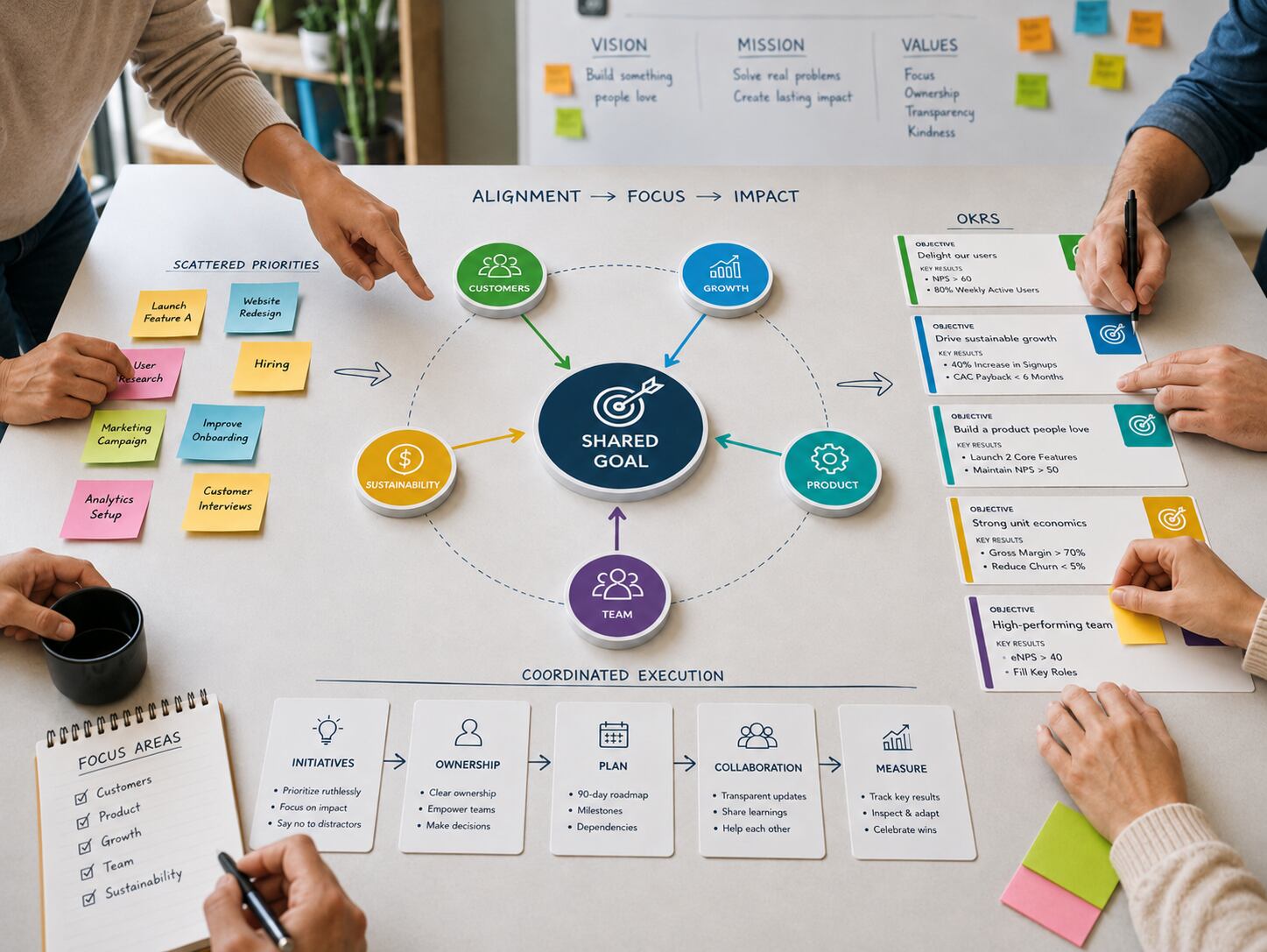
- TrainStation applies brain-based facilitation to clarify vision, define OKRs, break silos, and improve decision-making through structured workshops. This turns alignment into fast, coordinated execution and measurable results.
Understanding how startup founders use facilitators to align teams around shared goals is the engine for building high-performing machines. Strategic alignment obliterates confusion, cuts cognitive overload, and frees teams to channel their raw energy into innovation and execution rather than wasting time on conflicting priorities.
The crew at TrainStation steps in to help startups engineer this exact alignment using structured, high-energy team-building methods engineered around how humans process information, build trust, and call the shots.
Facilitation of Strategic Alignment and Vision
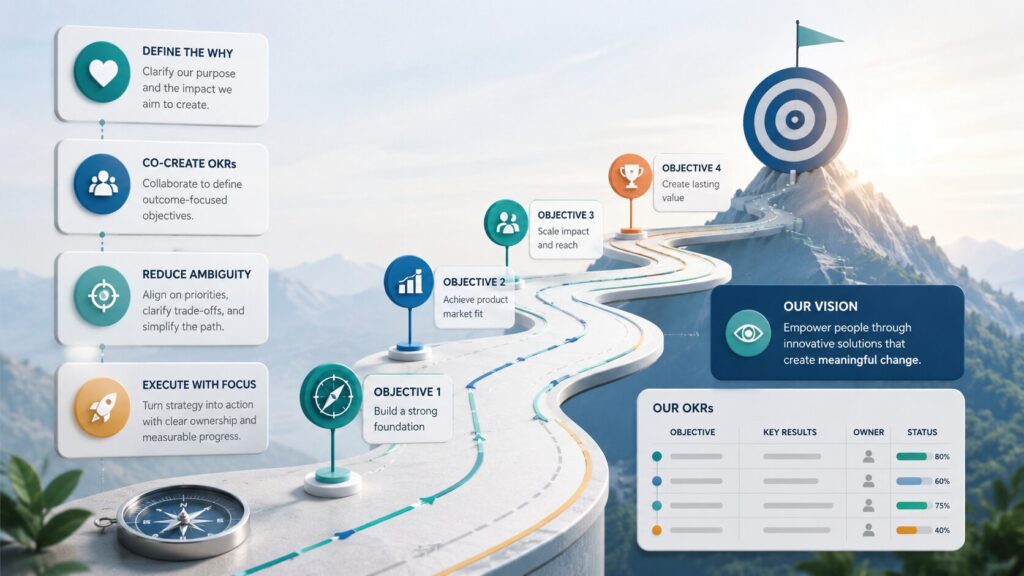
Strategic alignment happens when teams clearly understand the vision and their roles in shared goals, allowing them to focus on execution rather than uncertainty. Without clarity, the amygdala triggers stress that disrupts decision-making. Structured facilitation restores safety and improves coordination, focus, and momentum.
Define the ‘Why’: Activating Reward and Motivation Systems
When you understand why a goal matters—not just the tasks involved—your brain’s reward and motivation systems activate, increasing focus, ownership, and persistence. This engages the prefrontal cortex for clarity while releasing dopamine and oxytocin, strengthening motivation and trust.
Co-Create Objectives and Key Results (OKRs)
Clear, collective goals give the brain a concrete framework to organize around. This activates the prefrontal cortex, unlocking laser-focused planning and decisive choices. Well-guided facilitation moves teams away from vague, conventional ambitions and pushes them into defined Objectives and measurable Key Results, giving the brain the clarity it needs to execute with confidence.
Unpack Ambiguity
Unpacking ambiguity slams the brakes on cognitive overload, killing off the amygdala-driven panic that paralyzes executive decision-making. Professional facilitators tackle this by smashing massive, multi-layered problems into tight, bite-sized components tailored perfectly to the brain’s limited working memory capacity of just 3 to 5 items.
Aggressively clarifying hidden assumptions, mapping out future scenarios, and organizing chaotic information allow facilitators to instantly reduce cognitive load and restore laser focus. This high-octane process transforms paralyzing uncertainty into pure, actionable insight while simultaneously leveraging neuroplasticity to hardwire faster problem-solving, sharper adaptability, and flawless execution.
Breaking Down Silos and Fostering Collaboration
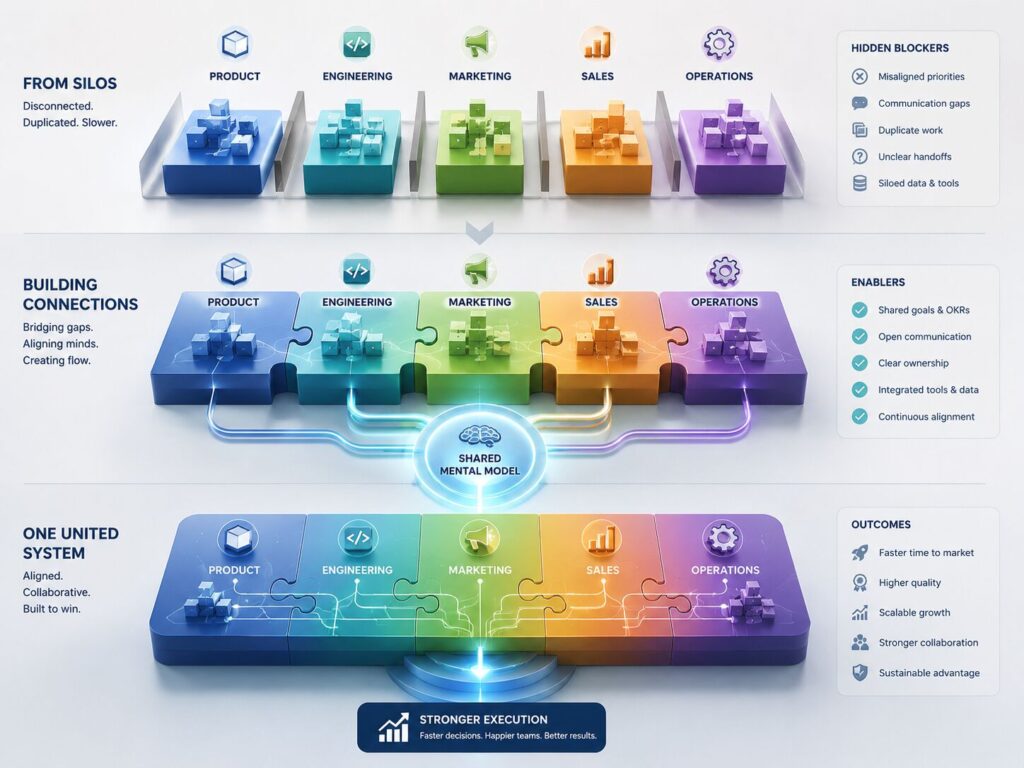
Siloed work environments trigger the brain’s social pain network, activating the amygdala, lowering oxytocin, and blocking information flow. Facilitated collaboration restores psychological safety, keeps the prefrontal cortex engaged, reduces cognitive load, and helps teams build shared mental models and work as one unit.
Unfold Hidden Blockers
Hidden blockers lie just beneath the surface, fueled by unconscious biases, stress responses, and cognitive blind spots that quietly derail goal alignment. Left unchecked, the brain defaults to automatic, defensive behavioral patterns managed by the basal ganglia, which often perpetuate team misalignment without anyone consciously realizing it.
Deliberately slowing down reactive tendencies allows facilitators to force teams to practice acute awareness. This tactical pause engages the prefrontal cortex to actively override these automatic, subpar responses. Exposing these hidden friction points before they escalate clarifies shared priorities and uses neuroplasticity to forge stronger pathways for collaborative decision-making.
Adopt ‘Ways We Work’ and Cross-Functional Workshops
Expert facilitators leverage cross-functional sessions to blend reflection, structured interaction, and repetition to encode brand-new behaviors. This precise approach builds robust neural pathways supporting total clarity, absolute accountability, and aligned decision-making across departments.
The brain locks in these habits through myelination, in which repeated neural firing insulates pathways, making them fire faster and more efficiently. Repeated practice during structured workshops allows teams to build thicker, faster neural connections. Over time, these reinforced patterns minimize misunderstandings, streamline communication, and help teams operate as a high-velocity, cohesive unit.
Decision-Making Improvement and Speed
Effective decision-making in fast-growth environments requires clarity, velocity, and unshakeable confidence. Facilitators guide teams through hyper-structured procedures, stripping away mental clutter and nurturing deep operational understanding to ensure the prefrontal cortex stays fully online for rapid-fire, aligned choices.
Neutralize Power Dynamics
The brain relies on specialized circuits to scan social status and corporate hierarchy. Perceiving a status threat—like feeling dismissed due to seniority—activates the exact same brain regions that register physical pain, triggering the amygdala and shutting down the prefrontal cortex.
Facilitators level the playing field by establishing neutral ground and structured discussion processes. Neutralizing power dynamics eliminates the status threat response, keeping everyone’s prefrontal cortex fully online. This objective approach lowers subjectivity, stops dominant personalities from hijacking choices, and ensures ideas are judged purely on strategic merit.
Structured Problem Solving
The human working memory has strict capacity limits, and complex, chaotic issues quickly trigger cognitive overload. Trainers eliminate this paralysis by breaking intricate business problems into manageable, sequential steps.
Adhering to a highly structured approach transforms intimidating uncertainty into absolute clarity, keeping the prefrontal cortex firmly in control. This systematic progression filters out confusion, realigns priorities, and builds massive confidence, ensuring final solutions secure total team commitment.
Creation of Psychological Safety and Cohesion
Psychological safety is non-negotiable for risk-taking and open collaboration. Feeling safe triggers the release of oxytocin, fostering deep trust and cooperation. Because the brain refuses to pitch innovative ideas under threat, facilitators engineer safe conditions, activating trust circuits so startup teams lock into shared goals free of fear.
Healthy Conflict Facilitation
Disagreements naturally cause the amygdala to flash red, forcing defensive reactions. Facilitators counter this hijack by establishing tight conversational structures and reframing friction as a developmental asset. Framing conflict as a collective puzzle to solve, rather than as a personal threat, keeps the brain firmly rooted in the prefrontal cortex. This shift activates advanced problem-solving networks rather than threat circuits, transforming friction into a relationship-builder.
Trust Building and Positive Feedback
Great facilitation skips superficial compliments, focusing instead on structured practices that highlight each member’s unique operational contributions. Receiving specific recognition lights up the brain’s reward system—the ventral striatum—unleashing a wave of motivational dopamine. This response leverages neuroplasticity to physically reinforce the neural pathways tied to those winning actions, hardwiring high-performance behaviors into the daily workflow.
Transitioning Planning to Action with Train Station
TrainStation fires up execution by turning abstract plans into high-velocity action. Facilitators lock down clear task ownership during workshops to smash operational confusion and cement absolute accountability.
Structured check-ins keep execution on track, while tactical post-mortems dissect outcomes to capture critical lessons and drive continuous performance improvements.
Key Takeaway
Understanding how startup founders use facilitators to align teams around shared goals helps clarify vision, foster collaboration, and drive measurable results, turning ambitious plans into coordinated action.
At TrainStation, we specialize in helping entrepreneurs transform alignment into execution. Our expert facilitators guide teams through brain-based strategies, structured workshops, and actionable planning to ensure goals are clear, ownership is established, and collaboration thrives. Reach out to us today to learn more!